Name
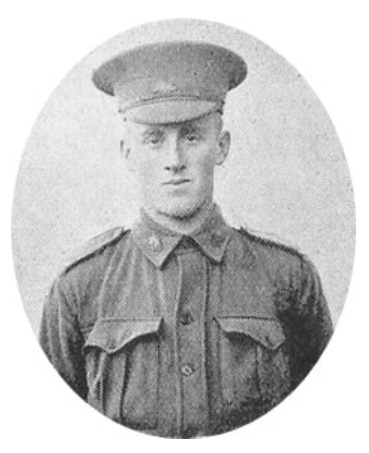
John William Easton Burns
Conflict
First World War
Date of Death / Age
22/04/1918
21
Rank, Service Number & Service Details
Private
791
Australian Infantry, A.I.F.
49th Bn. (formerly 40th Bn.).
Awards: Service Medals/Honour Awards
Not Yet Researched
Cemetery/Memorial: Name/Reference/Country
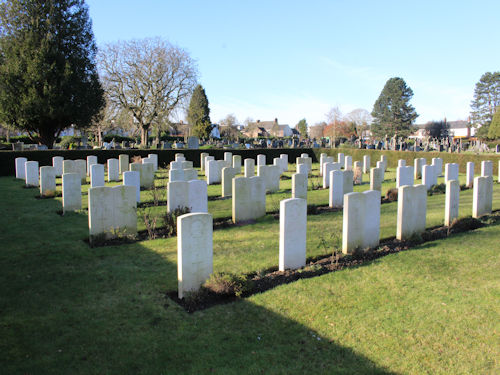
ST. ALBANS (HATFIELD ROAD) CEMETERY
Mil. A. 5.
United Kingdom
Headstone Inscription
Not Researched
UK & Other Memorials
Not on the St Albans memorials (*1)
Pre War
Biography
John William Easton Burns was born at Wyenna, Lilydale, Tasmania on 23rd May, 1896 to parents John & Mary Burns (nee Bailey) (He stated on his Attestation Papers that he was born at Launceston, Tasmania).
John William Easton Burns was a 20 year old, single, Labourer from Lilydale, Tasmania when he enlisted on 31st March, 1916 at Claremont, Tasmania with the Australian Imperial Force (A.I.F.). His religion was Presbyterian & his next of kin was listed as his father – John Burns, Wyenna, Lilydale, Tasmania.
Private John William Easton Burns was posted to 40th Infantry Battalion.
Private John William Easton Burns, Service number 791, embarked from Hobart, Tasmania on HMAT Berrima (A35) on 1st July, 1916 with the 10th Infantry Brigade, 40th Infantry Battalion “D” Company & disembarked at Devonport, England on 22nd August, 1916.
40th Battalion
The 3rd Division was raised in Australia early in 1916. The 40th Battalion was Tasmania's contribution to the strength of the division and it joined the Victorian-raised 37th, 38th and 39th Battalions to form the 10th Brigade.....
(Extract of Battalion information from the Australian War Memorial)
Reinforcements were only given basic training in Australia. Training was completed in training units in England. Some of these were located in the Salisbury Plain & surrounding areas in the county of Wiltshire.
Private John William Easton Burns proceeded overseas from 7th Training Battalion in England on 14th October, 1916 to join 26th Battalion (as listed on Casualty Form – Active Service & Statement of Service form). He was marched in to 2nd Divisional Base at Etaples, France on 16th October, 1916. Private Burns was posted to 26th Battalion then transferred & taken on strength of 49th Battalion in the Field on 1st November, 1916. (Some forms have date as 1st December, 1916).
Private John William Easton Burns had the letter “A” added to his Regimental number – 791 to 791A (owing to duplication of Regimental numbers)
Private John William Easton Burns was wounded in action on 7th June, 1917. He was admitted to 77th Field Ambulance on 7th June, 1917 with G.S.W. (gunshot wound/s) multiple then transferred to 53rd Casualty Clearing Station the same day. Private Burns was transferred & admitted to New Zealand Hospital at Hazebrook on 8th June, 1917 with G.S.W to Head, Legs, Arms & thigh. He was transferred the same day to 7th General Hospital at St. Omer. Private Burns was transferred on 30th July, 1917 ready for transfer to England then on 31st July, 1917 he embarked on Hospital Ship St. David for England.
49th Battalion
The 49th Battalion was raised in Egypt on 27 February 1916 as part of the "doubling" of the AIF. Approximately half of its recruits were Gallipoli veterans from the 9th Battalion, and the other half, fresh reinforcements from Australia. Reflecting the composition of the 9th, the 49th was predominantly composed of men from Queensland. The battalion became part of the 13th Brigade of the 4th Australian Division.
Arriving in France on 12 June 1916, the 49th moved into the trenches of the Western Front for the first time on 21 June. It fought in its first major battle at Mouquet Farm in August and suffered heavily, particularly in the assault launched on 3 September. The battalion saw out the rest of the year alternating between front-line duty, and training and labouring behind the line. This routine continued through the bleak winter of 1916-17.
Early in 1917, the battalion participated in the advance that followed the German retreat to the Hindenburg Line, supporting the 13th Brigade's attack at Noreuil on 2 April. Later in the year, the focus of the AIF's operations moved to the Ypres sector in Belgium. There the battalion fought in the battle of Messines on 9 June....
(Extract of Battalion information from the Australian War)
War Diary – 49th Battalion
7 – 9 June, 1917:
Bn attacked & captured the German line 0.28.d.23 – 0.34.b.35 (Appendices attached)
(Total casualties 66 Killed 7 DOW 274 wounded 20 missing)
(Extract of War Diary from the Australian War Memorial)
Mr J. Burns, Wyena, Lilydale, Tasmania, father of Private John William Easton Burns, was advised by Base Records on 24th June, 1917 that Private John Burns had been wounded.
Private John William Easton Burns was admitted to King George Military Hospital, Stamford Street, London, England on 31st July, 1917 with G.S.W. Head – severe. The Hospital Admissions form recorded “Notes from France. Wounded June 7/17. Wounds extensor aspect Rt Leg, Face, Back, Forearm & Lt Scalp. X-ray – Rt Ankle no F.D. present, but I think there has been injury to the lower 1/3 of Tibia, probably F.B. has penetrated the bone. Lt elbow No F.B. ? partial fract post surface condyle at humerus. Head ? fracture Lt supra orbital ridge, inner angle small F.B. over nasal bones.
Operation – F.B. removed. Wounds healed. Trans to Aust Hospl.” (Note: F.B. = Foreign body)"
Private John William Easton Burns was transferred to 3rd Auxiliary Hospital, Dartford, Kent on 28th August, 1917 then discharged on 29th August, 1917 for Furlough. The Hospital Admissions form recorded “Healed. Nearly well.” He was to report to No. 2 Command Depot on 12th September, 1917.
Mr J. Burns, Wyena, Lilydale, Tasmania, father of Private John William Easton Burns, was advised by Base Records on 14th August, 1917 that Private John Burns had been admitted to King George Military Hospital, London on 31st July with gunshot wound to right thigh severe. Mr Burns was advised on 21st August, 1917 that Private J. W. E. Burns was progressing favourably.
Mr J. Burns, Wyena, Lilydale, Tasmania, father of Private John William Easton Burns, was advised by Base Records on 5th September, 1917 that Private J. W. E. Burns had been reported suffering from gunshot wound to head, not gunshot wound to right thigh as previously advised.
Private John William Easton Burns was marched in to No. 2 Command Depot at Weymouth, Dorset, England on 12th September, 1917 from Furlough. He was transferred to No. 3 Command Depot at Hurdcott, Wiltshire on 5th October, 1917.
Private John William Easton Burns was medically classified as B1 A4 (fit for Overseas Training Camp when passed dentally fit) on 6th October, 1917 while posted at No. 3 Command Depot at Hurdcott, Wiltshire – “All wounds healed & feels fit except for a little stiffness in left arm”. He was still medically classified as B1 A4 on 15th November, 1917 & again on 8th December, 1917.
Private John William Easton Burns was marched out to Overseas Training Brigade at Longbridge Deverill, Wiltshire on 19th January, 1918 from No. 3 Command Depot at Hurdcott.
A trial for proceedings of a Court Martial was held on 8th March, 1918 for 791 Private J. W. E. Burns, 49th Battalion. Sentenced to “N.G.” (no other information listed)
Private John William Easton Burns proceeded overseas to France via Southampton on 13th March, 1918 from Sandhill Camp, Overseas Training Brigade. He was marched in to 4th A.I.B.D. (Australian Infantry Base Depot) at Havre, France on 14th March, 1918. Private Burns proceeded from 4th A.I.B.D. on 15th March, 1918 & rejoined 49th Battalion in the Field on 18th March, 1918.
Private John William Easton Burns was wounded in action (2nd occasion) on 5th April, 1918. He was admitted to 13th Australian Field Ambulance on 6th April, 1918 with GSW (gunshot wound/s) to Arm (fractured) then transferred on the same day to Casualty Clearing Station. Private Burns was transferred to 18th U.S.A. Hospital at Camiers on 7th April, 1918. He was transferred to England on 17th April, 1918 on Hospital Ship Ville de Liege.
49th Battalion
With the collapse of Russia in October 1917, a major German offensive on the Western Front was expected in early 1918. This occurred in France in late March and the 4th Division moved to defend positions around the Dernancourt on the River Ancre. The 49th Battalion assisted in the repulse of a large German attack on 5 April, launching a critical counter-attack late in the afternoon. The German threat remained until late April, when Australian troops of the 13th and 15th Brigades carried out a successful counter-attack and dislodged the enemy from Villers-Bretonneux. The 49th was held in reserve during the assault.....
(Extract of Battalion information from the Australian War Memorial)
War Diary – 49th Battalion
5-6 April, 1918: D24a28
As per report on Operations with messages attached. 6 Officers reported at 11.35 am from Reserves to replace casualties. Appendix 8.
7 pm – Our artillery barrage opened up on S.O.S. line and was successful in dislodging the enemy with the exception of 3 M.G.’s which gave a great deal of trouble. Intelligence report attached, Weather wet and cold. Appendix 9.
(Extract of War Diary from the Australian War Memorial)
Private John William Easton Burns was admitted to County of Middlesex War Hospital, Napsbury, St. Albans, England on 19th April, 1918 with multiple wounds to left Arm (as listed on Casualty Form – Active Service). He was reported to be dangerously ill. The Hospital Admissions form recorded “Multiple wound. R Humerus & c fract upper third sacrum fractured. T & T wd Buttocks ______inpelvic (?) abscess secondary haemorrhage from R Arm vessel ___ died 2 hours later.”
Private John William Easton Burns died at 11 am on 22nd April, 1918 at County of Middlesex War Hospital, Napsbury, St. Albans, Hertfordshire, England from wounds – shell wound to right Arm & Haemorrhage (as listed on Casualty Form – Active Service).
Mr J. Burns, Wyena, Lilydale, Tasmania, father of Private John William Easton Burns, was advised by Base Records on 23rd April, 1918 that Private J. W. E. Burns had been wounded (2nd occasion).
A death for John Burns, aged 21, was registered in the June quarter, 1918 in the district of St. Albans, Hertfordshire, England.
Private John William Easton Burns was buried at 2.30 pm on 26th April, 1918 in Hatfield Road Cemetery, St. Albans, Hertfordshire, England – Grave no. A 5 Soldiers’ Corner. This is now recorded by CWGC as Plot number Mil. A. 5. and he now has a Commonwealth War Graves Commission headstone.
From the burial report of Private John William Easton Burns - Coffin was good Polished Elm. The deceased soldier was accorded a Military Funeral. The coffin was draped with the Union Jack Flag, and surmounted by several wreaths. Gun Carriage was supplied by the A.S.C. Firing Party, Bugler and Pallbearers were supplied by the Administrative Headquarters, A.I.F. London. Prior to the interment a service was held by the Rev. W. H. Allan in the Cemetery Chapel. The grave will be turfed and an oak cross erected by the A.I.F. London. Administrative Headquarters, A.I.F. London were represented at the funeral.
Names of relatives & friends present at the Funeral – Uncle No. 466865 Sapper Burns, Thos. R. R. E. Gosport (2 Lord Russell Rd, Edinburgh)
A War Pension was granted to Mary Ann Burns, Wyena, mother of the late Private John W. E. Burns, 791A, 49th Battalion, late 40th, in the sum of 20/- per fortnight from 26th June, 1918.
Miss N. Williams, 46 Castle Road, Fleetville, St. Albans, Herts, England, wrote to Base Records on 17th July, 1920 with the following letter: “Would you please send the enclosed letter to the next-of-kin of Pte J. W. E. Burns, No 791, 49th Batt A.I.F. Australia, who was buried in St. Albans Cemetery on 22.4.18. As I am looking after his grave, having lost my own young man in France & I feel I would like to get in communication with his people to gain their full consent to look after the grave. Hoping it will not put you to any inconvenience & trusting you can oblige.”
Base Records replied to Miss N. Williams on 20th September, 1920 advising that her letter had “been redirected to the late soldier’s father, as under:- Mr J. Burns, Wyena, Lilydale, Tasmania.
Mary A. Burns, Wyena, Tasmania, wrote to Base Records on 8th July, 1921 with the following letter: “I am writing in regard to my sons belongings late Pte J. W. E. Burns, No. 791 49th Battalion. He died in the Napsbury War Hospital England on the 22nd April 1916. I got word from the Hospital that his belongings had been sent on to head quarters London, but I have never received any of his things. I would be very thankful if you would send any thing belonging to my late son, as I have written several times about them.”
Base Records replied to Mrs M. A. Burns on 18th July, 1921 with the following: “I have to acknowledge receipt of your communication of the 8th July and regret to inform you that the personal effects of your son, the late No. 791A Private J.W.E. Burns, 49th Battalion, as enumerated on the attached inventory, were included in a consignment shipped from England per s.s. “Barunga”, which vessel was lost at sea with all cargo, as a result of enemy action. Advice from A.I.F. Headquarters, London, states that no personal belongings were found in deceased’s kit bag, held in store.”
The Inventory of Effects of the late No. 791 Private J. W. E. Burns, 49th Battalion consisted of – 2 Wallets (containing:- Post Cards, Stamps, Cards), 1 Wrist Watch, 1 Cigarette Case, 1 Whistle, 1 Pr Scissors, 1 Diary, 1 Fountain Pen, 1 Knife, Badges, Letters, 3 discs, 1 Coin.
Private John William Easton Burns was entitled to British War Medal & the Victory Medal. A Memorial Scroll & Memorial Plaque were also sent to Private Burns’ father – Mr J. Burns, as the closest next-of-kin. (Scroll sent April, 1922 & Plaque sent October, 1922).
Acknowledgments
Gareth Hughes, Jonty Wild, Cathy Sedgwick, Beth Page - https://ww1austburialsuk.weebly.com/