Name
George Butcher
Conflict
First World War
Date of Death / Age
31/07/1917
19
Rank, Service Number & Service Details
Private
270188
Hertfordshire Regiment
Awards: Service Medals/Honour Awards
Not Yet Researched
Cemetery/Memorial: Name/Reference/Country
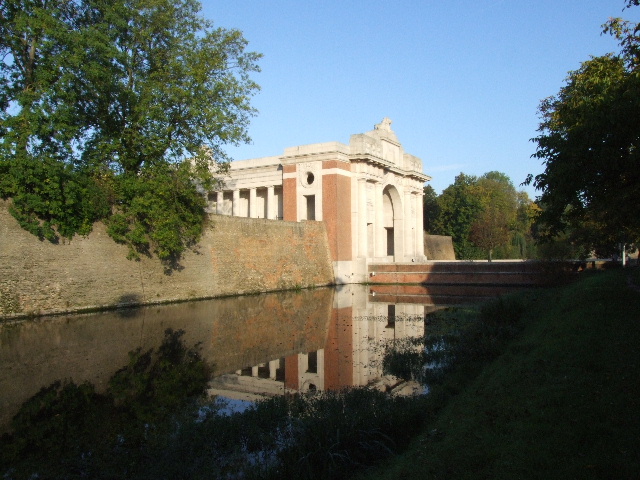
YPRES (MENIN GATE) MEMORIAL
Panel 54 and 56.
Belgium
Headstone Inscription
NA
UK & Other Memorials
Hertfordshire Regimental Memorial, All Saints Church, Hertford, Rush Green War Memorial, Essex
Pre War
George was born in Ipswich in Suffolk and was the son of Mr and Mrs S Butcher of Rush Green, Clacton-on-Sea.
He enlisted in Colchester.
Wartime Service
Died at St Julien on 31st July 1917. George was 19 when he died and is remembered on the Rush Green War Memorial.
St Julien
The 1st Hertfordshire Battalion were in support of an attack on the Langemarck Line and a general bombardment of the German lines commenced at 3.45am on the 31st July 1917 and the planned assault began. It had three objectives to achieve known as Blue, Black & Green and units of the 116th Brigade easily captured the first two objectives, preparing the way for the forward companies of the Hertfordshire battalion, to take the third objective.
They had marched from Vlamertingue to their assembly position arriving by midnight on the 30th/31st July 1917. A general bombardment of the German lines commenced at 3.45am on the 31st July. At 05.00am the Hertfordshires left their assembly positions to attack their objective, which lay over the crest of a ridge.
As they made their way forward, they came under heavy fire from both German machine guns and snipers but after eliminating a German strongpoint moved up towards St. Juliaan, which was only lightly held. The Battalion crossed the Steenbeek with some difficulty and two of its supporting Tanks became bogged down in the mud. Things then went from bad to worse. A pre-arranged artillery barrage never materialised due to the guns being unable to move forward over the muddy terrain and the German barbed wire defences, which were fifteen feet deep in some places, were found to still be intact. It was soon realised that ground could only be won by section "rushes" supported by the unit’s own fire.
The Cheshire Regiment were on the right of the battalion but the Black Watch, who were due to cover the left flank, had been seriously delayed. This left the Hertfordshire Regiment seriously exposed, the Germans exploited this by bringing a hurricane of fire down upon the stricken troops. This was followed by a German counterattack and by 10.30am it was clear that the objective could not be achieved. Casualties were very heavy with 459 men being killed, missing or wounded. This was 100% of its Officers and about 75% of its Other Ranks.
Acknowledgments
Jonty Wild, Martin Smith