Name
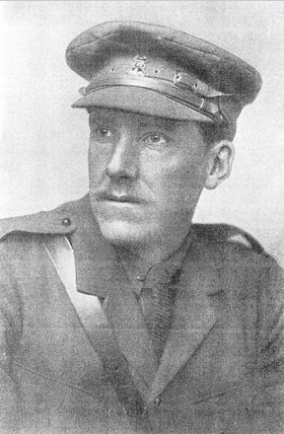
Hesketh Vernon Hesketh-Prichard (DSO)
Conflict
First World War
Date of Death / Age
16/06/1922
Rank, Service Number & Service Details
Captain
Awards: Service Medals/Honour Awards
Not Yet Researched
Distinguisged Service Order
Cemetery/Memorial: Name/Reference/Country
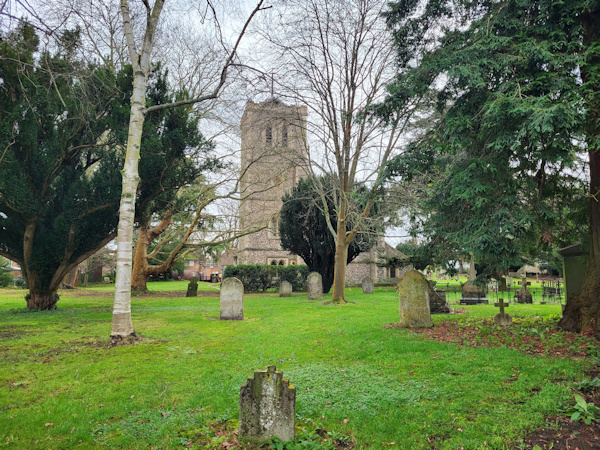
St Michael's Churchyard, St Albans
United Kingdom
Headstone Inscription
Not Researched
UK & Other Memorials
St Michael's Church Memorial, St Albans, We are not aware of any Gorhambury memorial
Pre War
The following is predominantly sourced from Wikipedia and the adapted:
Hesketh-Prichard was an only child born on 17 November 1876 in Jhansi, North-Western Provinces, India. His father Hesketh Brodrick Prichard, was an officer in the King's Own Scottish Borderers, died from typhoid six weeks before he was born. He and his mother returned to Great Britain soon after, and lived for a while at her parents' house, before moving to St Helier on Jersey for several years - so he was by his mother, Kate O'Brien Ryall Prichard.
His nickname was "Hex", which he would bear throughout his life. They returned to the mainland that the boy might be educated at a prep school in Rugby. In 1887 he won a scholarship to Fettes College, Edinburgh.
He was an English cricketer, explorer, adventurer, writer, big-game hunter, and marksman and an author. He played cricket at first-class level (taking nearly 340 wickets from 86 appearances), including on overseas tours, wrote short stories and novels in the adventure, mystery, and occult detective genres (one of which was turned into a Douglas Fairbanks film).
He started studying law, but in 1896 he abandoned a career in law and spent the summer travelling around southern Europe and North Africa.
He continued to author stories and books, many times with his mother. In 1913, writing on his own, he created the crime-fighting figure November Joe, a hunter and backwoodsman from the Canadian wilderness, which was broadcast as a radio play by the BBC in 1970.
Wartime Service
At the outbreak of the First World War, Hesketh-Prichard tried for a commission in the Black Watch and Guards, but because he was 37 he was turned down. He was eventually successful obtaining a post as Assistant Press Officer at the War Office and first sent to the front lines in France in February 1915 as an "eyewitness officer" in charge of war correspondents. By this time, open warfare on the front had ceased, and had stagnated into the trench warfare that characterised much of the conflict.
He was dismayed by the poor quality of marksmanship amongst the British troops and shocked to learn of the high attrition rate due to well-trained German snipers and he set about improving the quality of marksmanship, calibrating and correcting the few telescopic sights that the army already possessed.
He borrowed more sights and hunting rifles from friends and famous hunters back home, funded the acquisition of others from his own pocket, or donations he solicited. To investigate the quality of German armour plate, he retrieved a sample from a German trench. He discovered that their armour could only be penetrated by a heavy cartridge such as Jeffery 333, while British plate could be easily defeated by a much smaller gun such as a Mauser.
He produced various innovations, including a metal-armoured double loophole that would protect British snipers. He also commissioned realistic papier-mâché heads from a famous London theatrical wig and costume maker. These false heads were raised above the parapet on a stick running in a groove on a fixed board. To increase the realism, a lit cigarette could be inserted into the dummy's mouth and be smoked by a soldier via a rubber tube. If the head was shot, it was dropped rapidly, simulating a casualty. The sniper's bullet would have made a hole in the front and back of the dummy's head. The head was then raised in the groove again, but lower than before by the vertical distance between the glasses of a trench periscope. If the lower glass of a periscope was placed before the front bullet hole, its upper glass would be at exactly the same height as the bullet had been. By looking through the rear hole in the head, through the front hole and up through the periscope, the soldier would be looking exactly along the line the bullet had taken, and so would be looking directly at the sniper, revealing his position
Hesketh-Prichard was eventually successful in gaining official support for his campaign, and in August 1915 was given permission to proceed with formalised sniper training and by November of that year, his reputation was such that he was in high demand from many units.
In December, he was ordered on General Allenby's request to the Third Army School of Instruction and was made a general staff officer with the rank of captain. He was mentioned in dispatches on 1 January 1916 and in August 1916, he founded the First Army School of Sniping in the village of Linghem, Pas-de-Calais. Starting with a first class of only six, in time he was able to lecture to large numbers of soldiers from different Allied nations, proudly proclaiming in a letter that his school was turning out snipers at three times the rate of any such other school in the world. In October of that year he was awarded the Military Cross, the citation of which read:
"For conspicuous gallantry and devotion to duty. He has instructed snipers in the trenches on many occasions, and in most dangerous circumstances, with great skill and determination. He has, directly and indirectly, inflicted enormous casualties on the enemy."
In late 1916 he was taken ill and was granted leave. His health remained poor for the rest of his life, and he spent much of it convalescing. It was during this period of leave that he learned that he had been awarded the Distinguished Service Order, for his work with the First Army School of Sniping, Observation, and Scouting and for his wartime work with the Portuguese Expeditionary Corps, he was appointed a Commander of the Military Order of Avis.
In July 1919, Hesketh-Prichard was elected Chairman of the Society of Authors, of which he had been a member for many years.[51] Poor health forced him to resign the following January.
In 1920, he wrote his account of his wartime activities: the critically acclaimed Sniping in France, which is still referred to by modern authors on the subject
Hesketh-Prichard died from sepsis on 14 June 1922, at Old Gorhambury House – just outside St Albans and the ancestral home of his wife in Hertfordshire, England. His obituarists ascribed this to an obscure form of blood poisoning brought on by gassing in the trenches during his war service. However, his ailments, including fatigue, heart–digestive–neurological disorders, appendicitis, cognitive problems, depression, anxiety – are today recognised as differential symptoms of malaria. Left untreated they sometimes lead to organ failure and death. His body was cremated and the ashes interred in the family vault at St Michael's Church, St Albans and he appears on their Great War memorial.
Acknowledgments
Gareth Hughes, Jonty Wild